Venice's Other Bridge - A Story of Plague and Redemption
· 3 min read
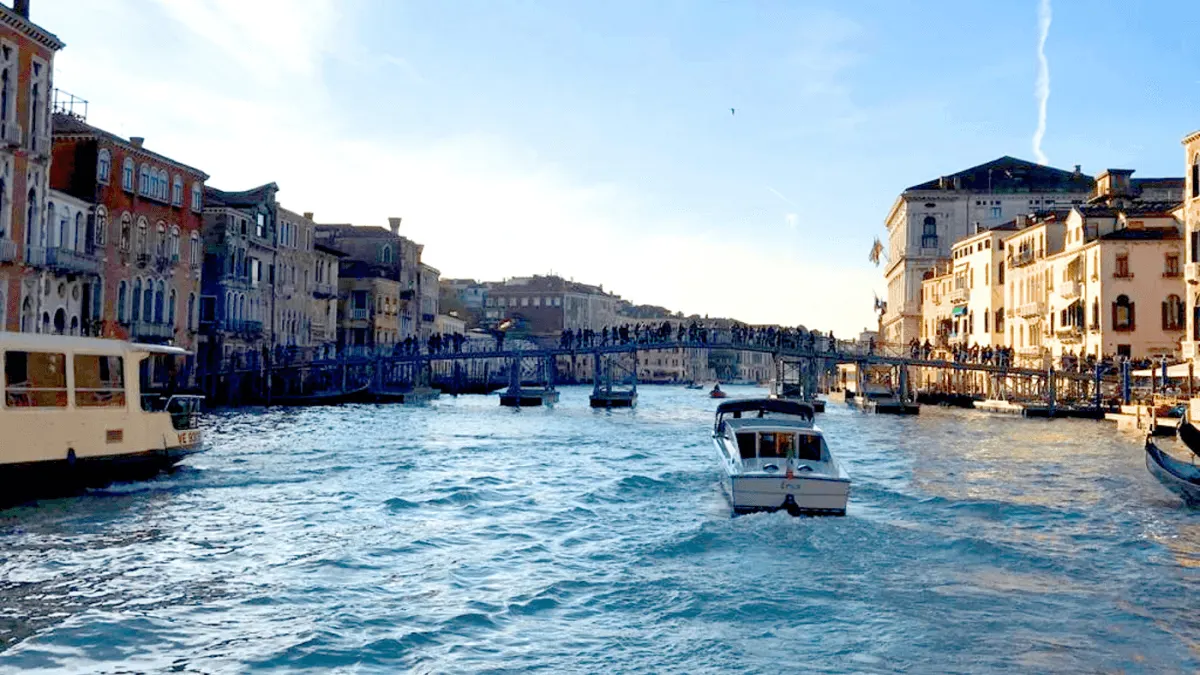
By Nataliya Dmytruk, Certified Tour Guide, Italy, and Expert Tourist Guide of Venice. Join Nataliya on livestream virtual tours of Venice.
Known by many names - the "City of Canals," the "Floating City," the "Serene City" - Venice is also called The City of Bridges, boasting over 400 bridges crossing its numerous canals. While the Rialto Bridge and the Bridge of Sighs are among the most well-known, there is a lesser-known yet truly distinct bridge with an exceptional story worth exploring...
The Black Death was the deadliest pandemic recorded in human history. No one understood how to heal the infected or how to avoid the disease.
The members of the Venetian government clearly noted that the plague began locally after Venetian merchants came back from the East. In 1423, the government decided that all ships on their way to Venice be isolated at a designated island. At first, 10 days of isolation were required, then 20 days, though this also proved ineffective. Finally, when a 40-day ("quarantena" - meaning "forty days" in Venetian-Italian) quarantine was imposed, this measure appeared helpful in stemming the spread of the plague. Sadly, citizens continued to succumb to the plague through the 15th and 16th centuries.
By the spring of 1630, the plague was ravaging many cities in Italy. Within a year, it killed a third of the population of Venice. The Venetian Senate declared penitence and prayer processions be held continuously, and determined to commence construction of the ex-voto church dedicated to the Virgin Mary - Santa Maria Della Salute (Saint Mary of Health.) Miraculously, infections declined, and Venice was declared plague-free toward the end of 1631 - two centuries earlier than in all other countries.
A site was chosen; more than 1,000,000 wooden piles were driven into the mud to make a solid foundation. The architect, Baldassarre Longhena, never saw his church finished as he died a few years before its completion. Longhena was described as a short, dapper man, always dressed in black, with a quiet and gentle manner - and with an awkward habit of asking everyone he met their opinion of whatever work he had on hand.
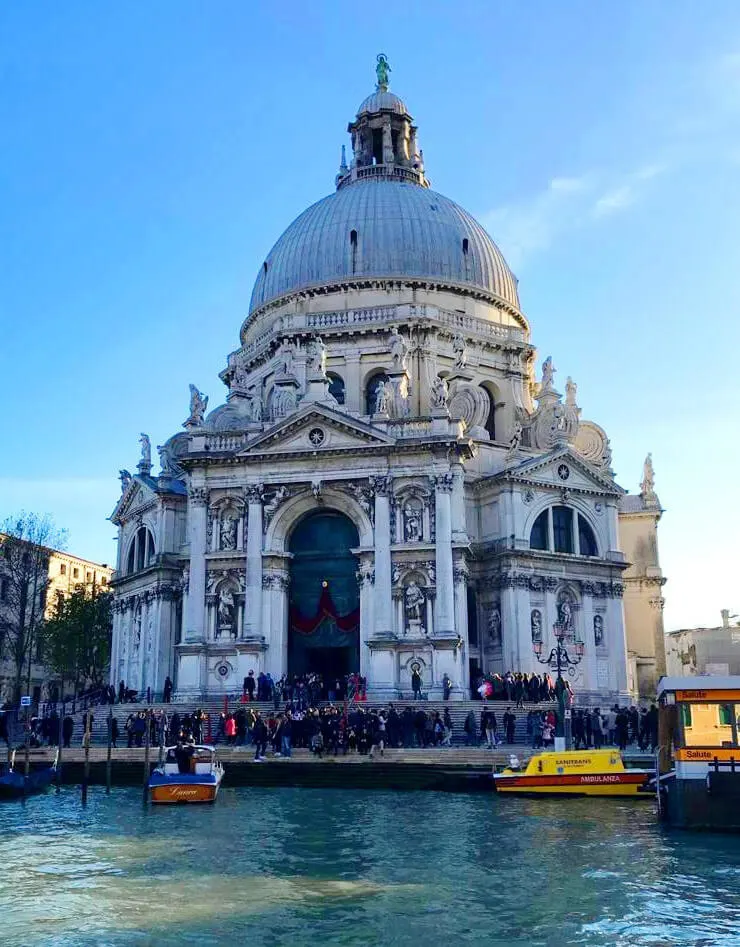
The church, with its balloon-like dome, dominates Venice's lagoon scene more than the other famous buildings in the area. It is a supreme masterpiece of the Venetian Baroque.
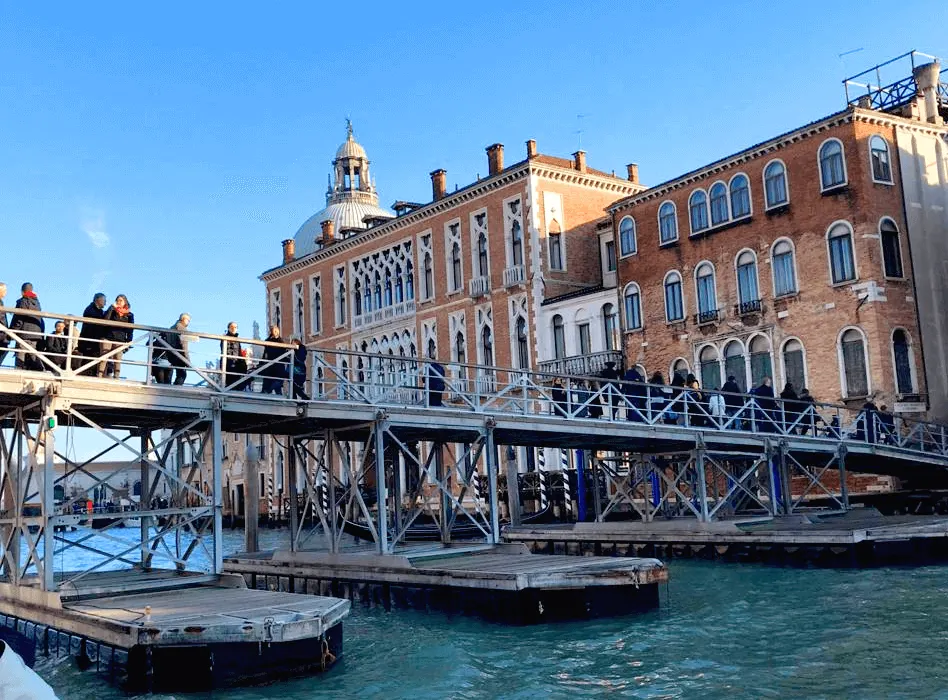
This year - 2020 - for the first time in Venetian history since the inauguration of the church, there won’t be any bridge for Festa Della Madonna Della Salute. Nonetheless, the Venetians are eager to visit the church on November 21st to ask the Virgin to once again release them from a plague.
That we should all be quickly healed from this plague! Salute!
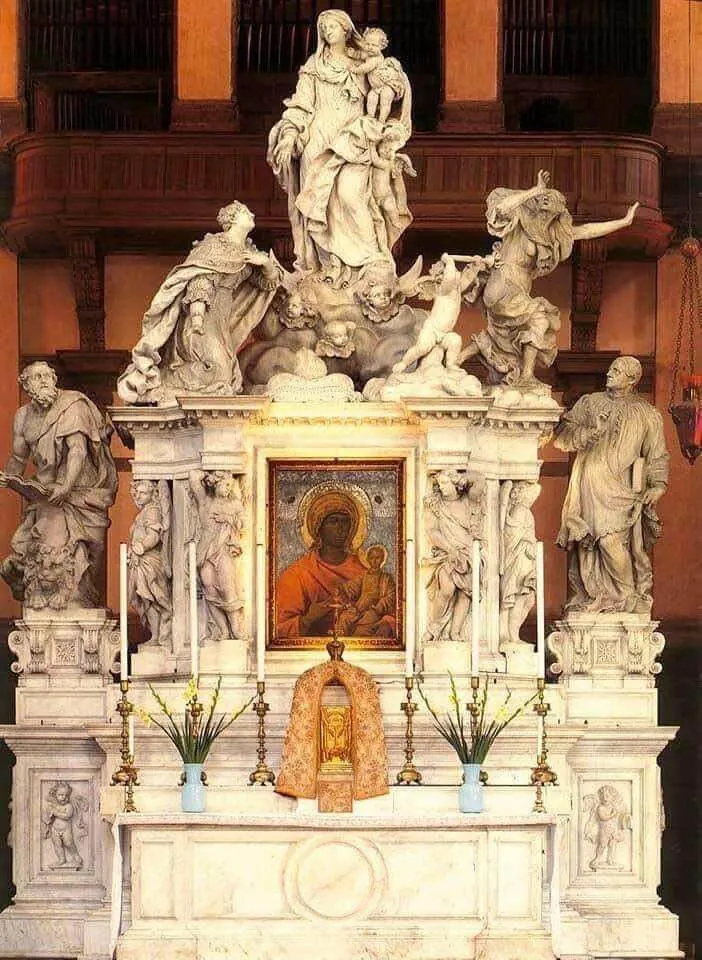
Altar of the miraculous virgin. Note the angel, top right, who is pushing back the plague. The center painting, La Mesopanditissa, was brought from Crete by the Doge Francesco Morosini and dedicated on November 21, 1670.
Categories: Culture