Tokyo and Jerusalem's Temple Rituals - More In Common Than You Might Expect
· 4 min read
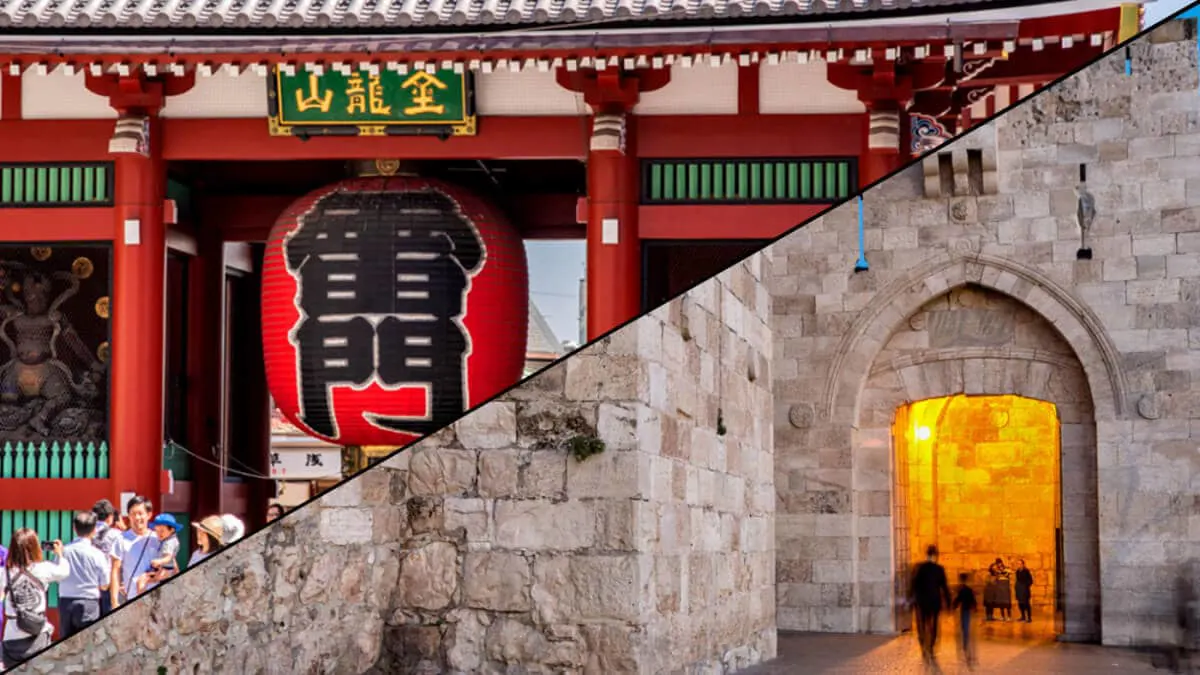
Before I went on Eriko Shiratori's tour of Sensoji Temple and the Asakusa District in Tokyo, I didn't really know what to expect. I hadn't googled any of the highlights, and the extent of my understanding of Japanese culture was mainly based on anime, sushi and tea ceremonies, and whatever I still recalled from my American high school history class. So, Americanized pop-culture, yes; deep understanding, no.
I was in for a surprise. A visually beautiful and inspiring live lesson in culture, tolerance, and harmony. Not only that, but throughout Eriko's superb tour, I was struck by similarities in the Buddhist and Shinto rituals to that of my own Jewish heritage.
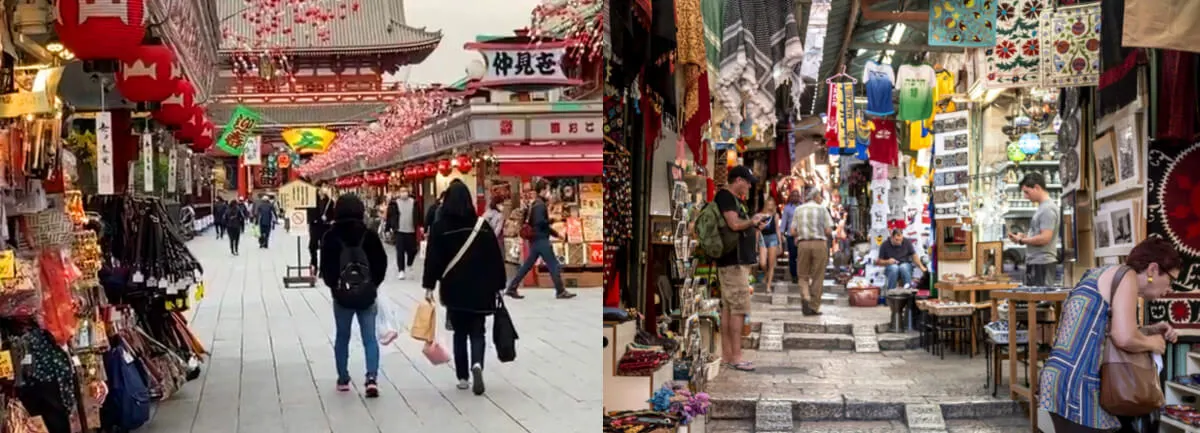
Left: Nakamise market street in Tokyo. Right: Old City Arab market, Jerusalem.
The Sensoji Temple compound is simply a feast for the eyes. The Kaminarimon Gate leaves no question that you are about to enter a significant and traditional space. Everywhere you look is vibrant artistry. Leading up to the temple, the way is lined with the bustling market of Nakamise Street. Having lived in the Old City of Jerusalem for a year, a marketplace leading up to a holy temple called to mind the market that had once led up to the ancient temple of Jerusalem, and today's Suk just beyond the Jaffa Gate. Certainly, markets leading up to religious sites make a lot of sense anywhere, any time. As Eriko explained the unique foods and objects we came across, we arrived at something else that tickled the associative part of my memory. A huge pot of purifying incense burned in front of Sensoji temple... and across from this giant bowl of incense? A beautifully sculpted fountain that serves as a place to wash one's hands before entering the temple. Just a week ago, I had watched as another tour guide explained the ritual washing of one's hands at the Western Wall Plaza, Jerusalem, before prayers. Both the Buddhist and Jewish traditions use a ladle or cup for this purpose and specify which hand should first be cleansed. These parallel purification rituals were striking in their similarity.
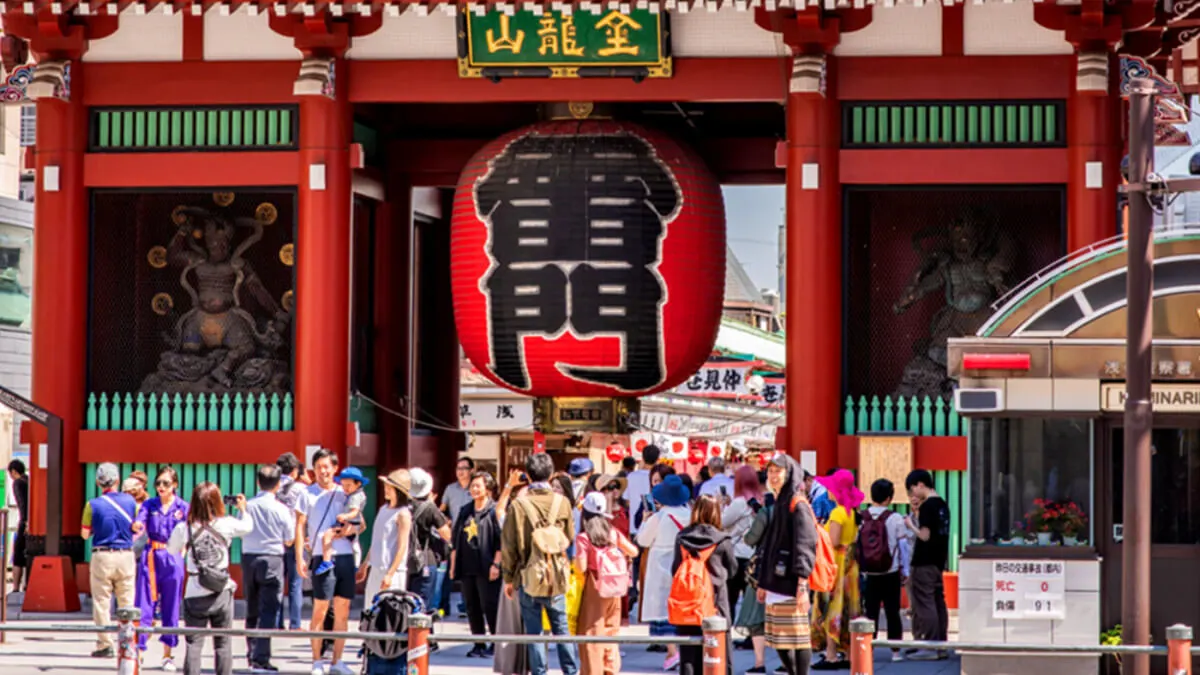
The Kaminarimon Gate.
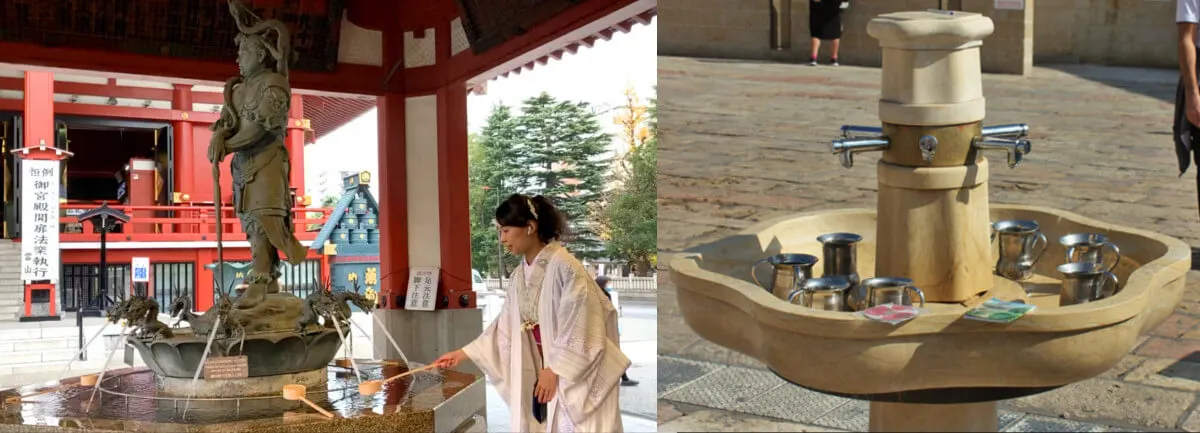
Eriko demonstrates handwashing ritual at Sensoji Temple (Image: Hop A Tour.) Detail: Hand washing fountain at Western Wall Prayer Plaza (Orginal: Beko, Creative Commons Attribution-Share Alike 4.0 International)
Incense smelled, hands washed, one approaches the place of prayers. Before entering it is customary to make an offering. This was true at both Sensoji Temple and the Shinto Shrine Eriko took us to shortly after. At both places, it seems a coin is generally used. Thinking it over later, this was also familiar. Jewish tradition carries the idea of offering a symbolic sum as a way to demonstrate the requisite repentance and humility if one's prayers are to be answered. Everyone passes the charity basket or collection plate in one way or another, it seems.
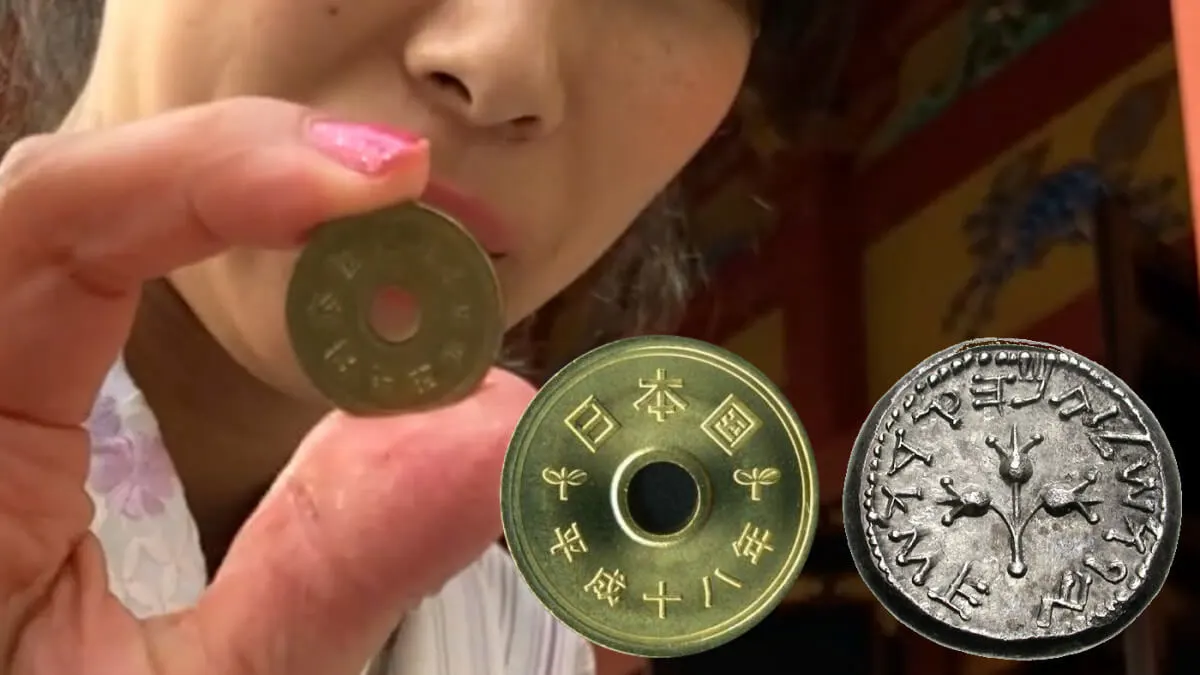
Five yen piece, inset left. Ancient half-shekel piece, inset right, circa 68 CE - detail, CNG Coins. Creative Commons Attribution-Share Alike 3.0 Unported.
There are many parallels one could make between the rituals Eriko showed us and other religion's traditions. Another we came across: two guardians, protecting the entrance to a sanctified area. At the Shinto Shrine, these appeared to be Lions. In the ancient Temple of Solomon, these had been cherubim placed before the ark. Fearsome guardians - check!
A final beautiful lesson? Eriko showed us that these two religions - Buddhism and Shinto - peacefully share a very proximate space. It takes about a minute to walk from the Buddhist Temple to the Shinto Shrine. Religious tolerance in a very close space? That's a cultural lesson to never stop learning.
From my acknowledged ignorance when joining this tour, I had no notion that I might not only be enchanted by the beauty of this place - but I certainly didn't expect to have any echoes of my own culture reflecting back at me. To encounter a foreign culture that is new to you and then recognize within it familiar aspects, strikes a chord. But perhaps it shouldn't be such a surprise after all. Eriko made Japanese culture accessible and welcomed us into her world. And the more one explores the world, the clearer it becomes that we have much more in common than what appears to separate us.
You can enjoy Eriko's mesmerizing tour of Sensoji Temple and the Asakusa District by following this link. Tour of Jerusalem's Old City coming soon...
Join our newsletter for the latest updates and special offers.
Do you have a cross-culture story or related insight to share? Write to us at contact@hopatour.com - we'd love to hear from you!
Categories: Culture, Cross-Culture